
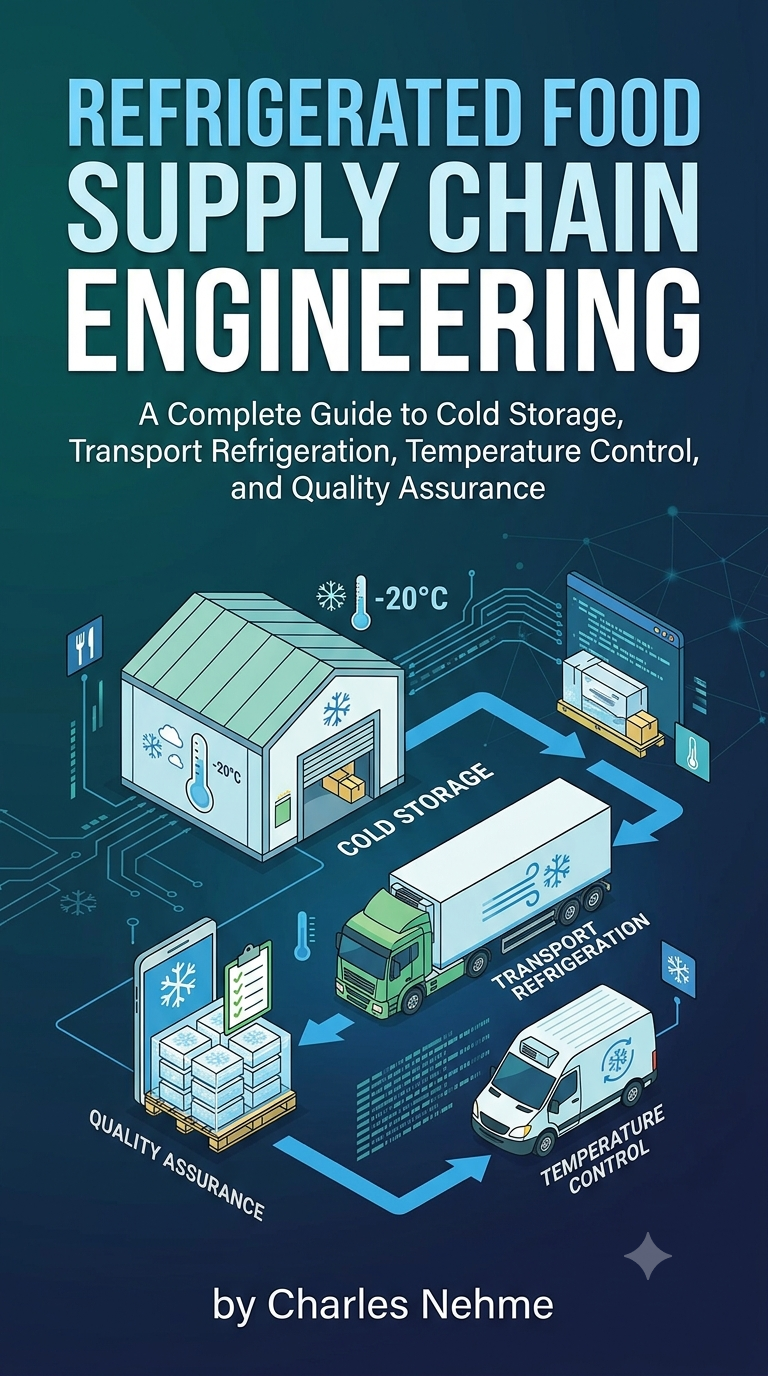
REFRIGERATED FOOD SUPPLY CHAIN ENGINEERING A Complete Guide to Cold Storage, Transport Refrigeration, Temperature Control, and Quality Assurance
The refrigerated food supply chain is one of the most critical engineering and logistics systems in modern society. Every day, millions of tons of fresh produce, meat, seafood, dairy products, frozen foods, and temperature-sensitive ingredients travel thousands of kilometers before reaching consumers. Behind every successful delivery lies an uninterrupted cold chain—a carefully engineered sequence of refrigerated storage, transportation, monitoring, and handling designed to preserve food safety, nutritional value, and product quality.
A break in the cold chain, even for a relatively short period, can accelerate microbial growth, reduce shelf life, increase food waste, and compromise consumer safety. As global food distribution networks expand and customer expectations for fresh, high-quality products continue to rise, maintaining precise temperature control has become more important than ever. Refrigeration is no longer simply about cooling products; it is about managing risk, ensuring regulatory compliance, improving operational efficiency, and protecting public health.
This book has been written to provide a practical, engineering-focused guide to the refrigerated food supply chain. Rather than concentrating solely on refrigeration equipment, it examines the complete journey of refrigerated products—from production facilities and processing plants to cold storage warehouses, refrigerated vehicles, retail display cases, and ultimately the consumer's refrigerator. Every stage of the supply chain introduces technical, operational, and managerial challenges that require careful planning and disciplined execution.
Readers will explore the principles of food preservation, refrigeration system design, warehouse operations, transport logistics, packaging technologies, temperature monitoring, risk management, quality assurance, and emergency response planning. The book also discusses emerging technologies such as IoT-enabled monitoring, predictive analytics, artificial intelligence, digital twins, and sustainable refrigeration solutions that are reshaping the future of cold chain management.
Throughout the chapters, emphasis is placed on practical application. Real-world operational considerations, engineering best practices, maintenance strategies, performance metrics, and inspection checklists are presented to help organizations improve reliability, reduce energy consumption, minimize product losses, and comply with increasingly stringent food safety regulations.
This book is intended for a broad audience, including:
- Refrigeration and HVAC engineers
- Cold storage warehouse designers
- Food processing engineers
- Supply chain and logistics professionals
- Refrigerated transportation operators
- Facility managers
- Food safety and quality assurance professionals
- Commissioning engineers
- Maintenance personnel
- Engineering students and technical educators
Whether you are designing a new refrigerated warehouse, operating a fleet of refrigerated trucks, auditing cold chain performance, or seeking to improve food safety and energy efficiency, the principles presented in this book are intended to serve as both a technical reference and a practical field guide.
The refrigerated food supply chain is only as strong as its weakest link. Excellence is achieved not through a single piece of equipment or one successful delivery, but through consistent engineering, disciplined operations, continuous monitoring, and a commitment to maintaining product integrity from farm to fork.
It is my hope that this book will help engineers, operators, and decision-makers build more resilient, efficient, and sustainable cold chain systems that reduce food waste, protect consumers, and deliver safe, high-quality products throughout the world.
Charles Nehme https://bit.ly/m/HVAC