
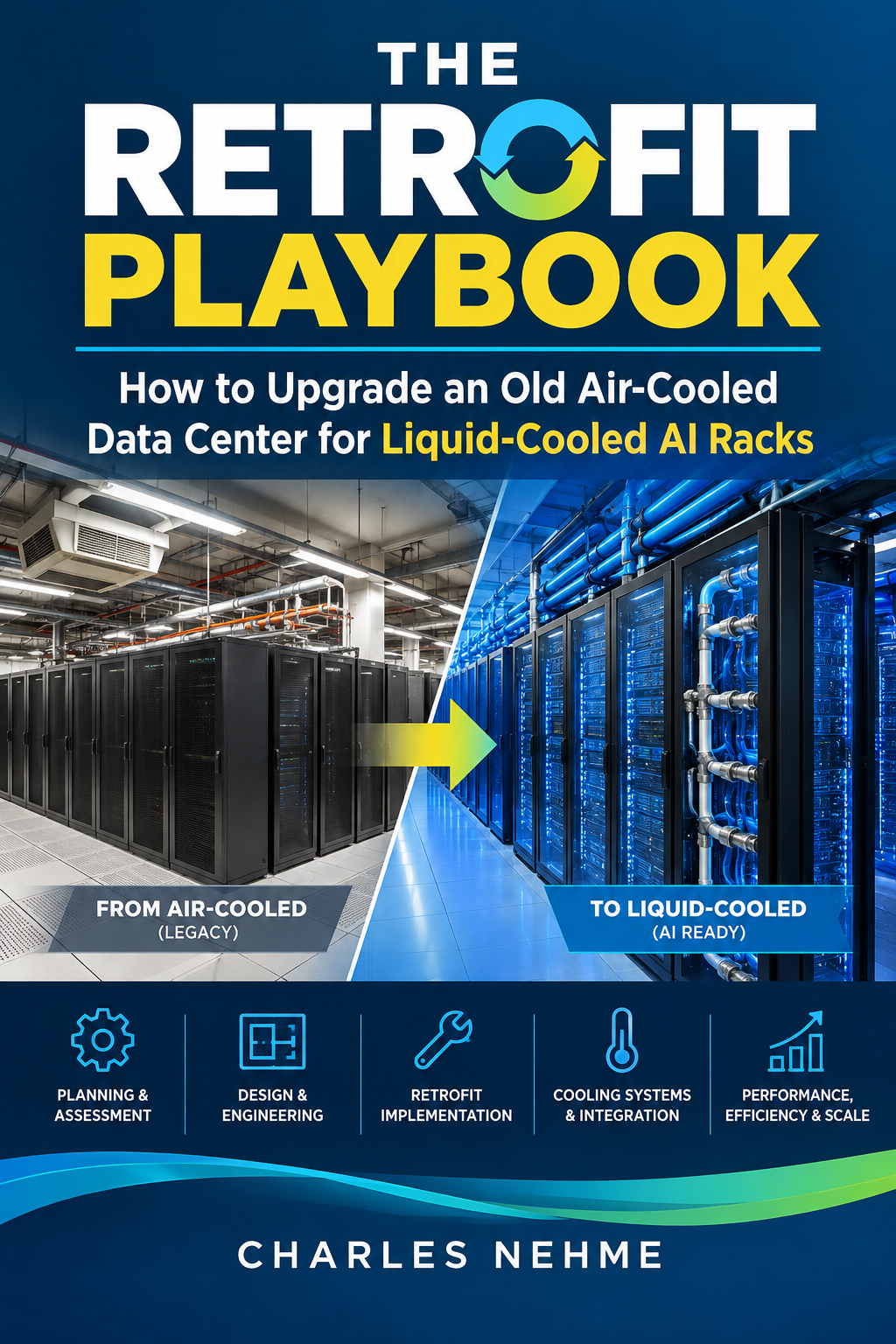
The Retrofit Playbook How to Upgrade an Old Air-Cooled Data Center for Liquid-Cooled AI Racks
The rush
A few years ago, a normal server rack in a data center used about 5 to 10 kilowatts (kW) of power. A large rack might use 15 kW. Fans inside the servers pulled cold air from the room, the air picked up heat, and big air conditioners in the room cooled it down again.
Then AI chips arrived. Companies such as NVIDIA and AMD now sell chips that use far more power than older chips. A single AI rack today can use 100 to 120 kW or more. Some future designs are planned at even higher levels.
Air cannot carry that much heat out of a rack. Air is thin and light. It holds very little heat compared with water. At around 30 to 40 kW per rack, air cooling starts to fail, even with the best fans and the best room design. Above that, you need liquid.
So operators face a choice:
- Build a new data center designed for liquid cooling from day one.
- Upgrade an existing building.
Building new takes a long time. Three to five years is common. The land has to be bought. Permits have to be approved. The power company has to build lines and substations, and in many places the waiting list for a new power connection is years long. Then the building has to be built, and the equipment has to be bought and installed.
An existing data center already has most of those things. It has a building, a legal permit, and a power connection. Often it has spare power that is not being used, because the old racks never used as much as the building was designed for.
That is why retrofitting is attractive. The fastest way to start earning money from AI customers is often to take a building that already has electricity and change the inside.