
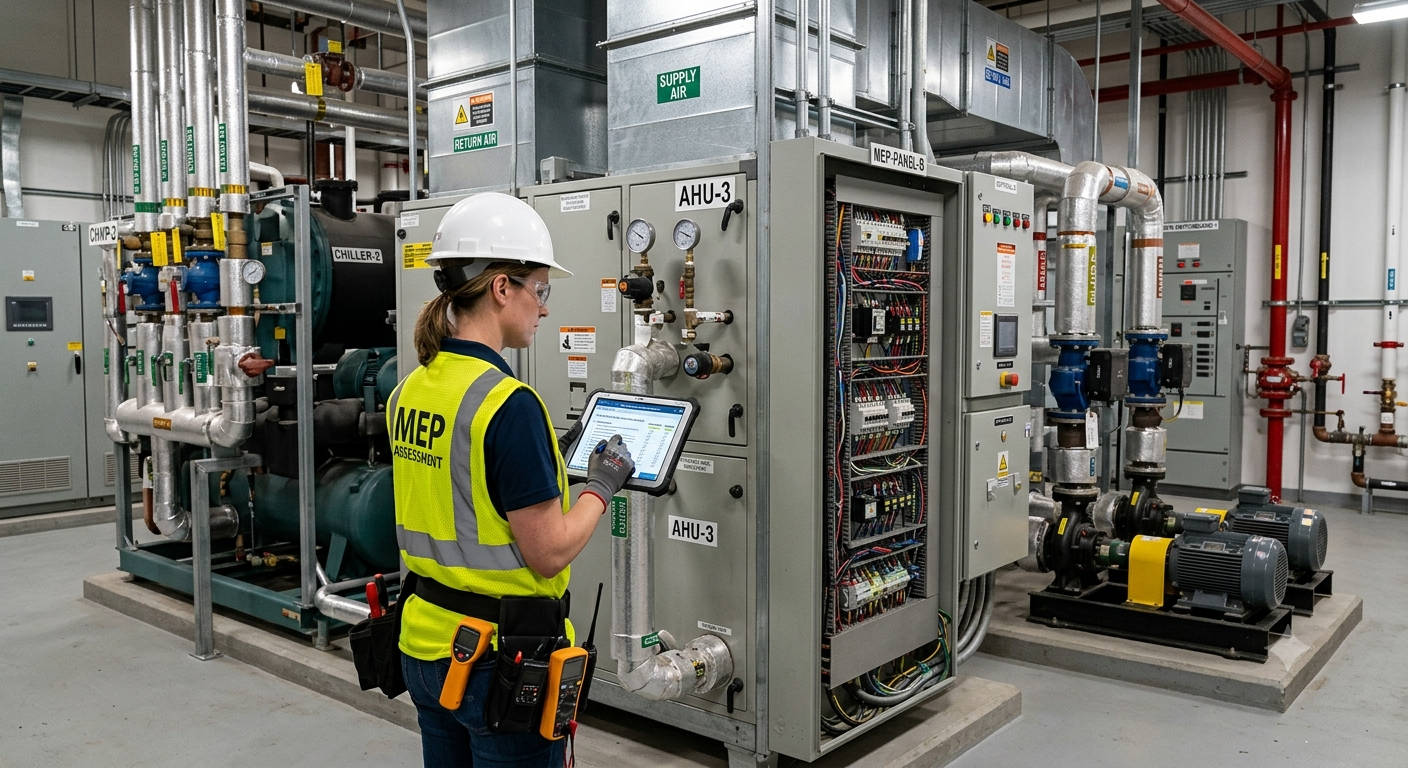
HVAC & MEP Equipment Assessment Checklist & Scoring Model
Introduction to the HVAC & MEP Equipment Assessment Model
In facilities management and building engineering, maintaining Mechanical, Electrical, Plumbing, and Building Automation systems is critical to operational continuity, energy efficiency, and life safety. This interactive 100-Point HVAC & MEP Equipment Assessment Spreadsheet is designed as a structured, quantitative framework to evaluate the health of your facility’s core engineering assets.
By establishing a standardized metric across 5 core MEP disciplines—each allocated a maximum of 20 points—this model eliminates subjective guesswork. It translates real-world physical conditions into a high-level operational asset score, giving engineering managers, consultants, and stakeholders immediate clarity on which systems require immediate capital investment or routine maintenance.
How to Use the Spreadsheet
The spreadsheet is designed for seamless data collection during facility walkthroughs or technical audits. Follow these steps to complete an assessment:
- Conduct the Technical Walkthrough: Inspect the equipment corresponding to each of the 100 checkpoints listed in the document. The checklist is sequentially categorized into five color-coded technical disciplines for easier navigation on-site.
- Assign a Condition Status: For each item, evaluate its current physical and operational state. In the Condition Status column, input one of the four standardized grading terms: Excellent, Good, Fair, or Poor.
- Log Field Discoveries: Use the Field Notes / Comments column next to each item to document explicit data points such as model numbers, measured runtime hours, localized corrosion, pressure differentials, or recent part replacements.
Scoring Mechanics & Multipliers
The spreadsheet handles all scoring logic dynamically using automated point multipliers. Each of the 100 checkpoints carries an equal maximum value of 1 point, feeding into its respective 20-point discipline cap.
When you enter a condition status, the spreadsheet applies a specific fractional multiplier to determine the exact point value achieved for that line item:
- Excellent (Multiplier: 1.00): The equipment is fully operational, pristine, or like-new. It shows no signs of degradation and meets all performance specifications. (Yields 1.00 Point)
- Good (Multiplier: 0.75): The asset is completely functional but exhibits minor, expected cosmetic wear or superficial aging. No immediate remedial action is required. (Yields 0.75 Point)
- Fair (Multiplier: 0.50): The system is operational but degraded. It shows signs of neglect, minor leaks, minor belt slippage, or sensor drifting. It requires near-term maintenance, calibration, or heightened monitoring to prevent failure. (Yields 0.50 Point)
- Poor (Multiplier: 0.00): The asset is in a critical state, has failed completely, or presents an immediate safety/regulatory non-compliance risk. Immediate repair, overhaul, or capital replacement is mandatory. (Yields 0.00 Points)
Interpreting the Summary Dashboard
The top section of your spreadsheet features a Summary & Scoring Dashboard that pulls data directly from the checklist below. It compiles the point fractions for each category, aggregates them out of a maximum possible score of 100, and assigns an overarching operational asset rating:
- Class A (Score: 85 – 100) | Excellent Condition: Systems are exceptionally well-maintained. Focus should remain on standard preventative maintenance schedules.
- Class B (Score: 70 – 84) | Minor Maintenance Required: The facility is running smoothly, but specific components are showing early signs of wear. Address "Fair" items during upcoming routine service windows to avoid compounding issues.
- Class C (Score: 50 – 69) | Major Remedial Works Required: Core systems are visibly degraded. This score indicates an increased risk of equipment downtime and energy inefficiency. Remedial work orders should be issued immediately.
- Class D (Score: Below 50) | Critical Asset Risk: The infrastructure is suffering from systemic failure or severe deferred maintenance. Operating in this zone risks catastrophic plant shutdown, safety violations, and costly emergency repairs. Immediate capital expenditure (CapEx) planning is required.
For HVAC Global consultation , Books and Audiobooks https://bit.ly/m/HVAC